


What is Intracytoplasmic Sperm Injection (ICSI)? In Which Cases Is It Preferred, and What Determines Success?
Among the assisted reproductive techniques developed for couples struggling to conceive, ICSI (intracytoplasmic sperm injection) plays a significant role. This method enables controlled fertilisation, particularly when sperm-related issues are present.
So, exactly how does ICSI work, who requires it, and what factors influence success?
What Exactly Does Microinjection (ICSI) Mean?
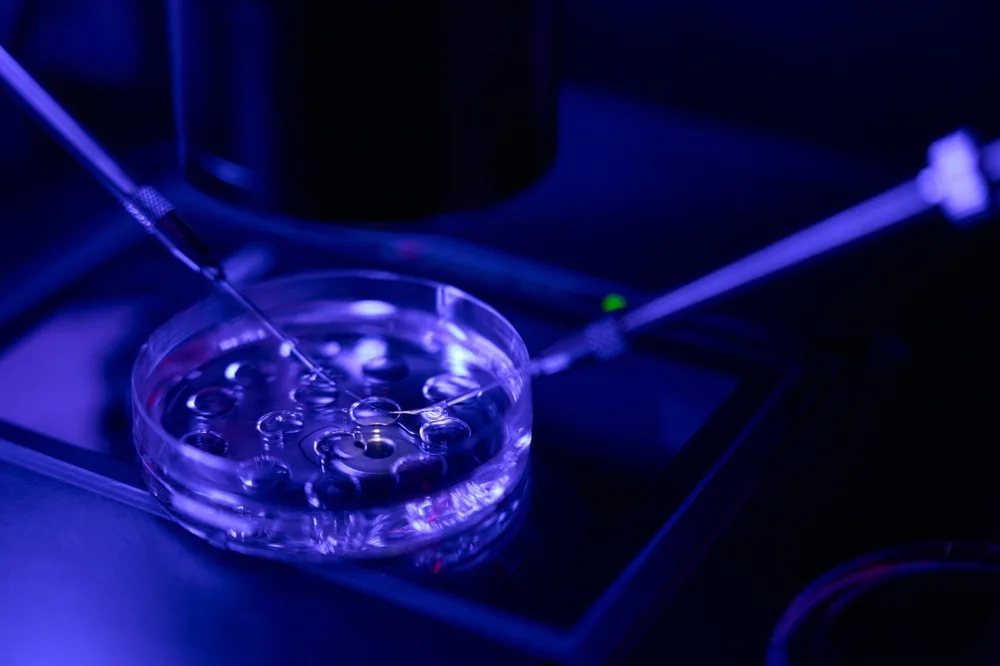
ICSI involves the direct placement of a single selected sperm cell into the egg using microscopic equipment.
In this approach, the fertilisation process is not left to natural progression; it is entirely managed in the embryology laboratory. For this reason, it is considered a more targeted method compared to conventional IVF.
What Is the Difference Between Microinjection (ICSI) and Conventional IVF?
In conventional IVF, the sperm and egg are placed together in the same environment, and fertilisation is allowed to occur naturally.
In the microinjection (ICSI) method, however, a single sperm cell is injected directly into the egg.
For this reason, ICSI:
- In cases where sperm count or motility is low
- In cases where fertilisation could not be achieved in previous treatments
becomes a more effective option.
Who Is Microinjection Recommended For?
Microinjection is not necessary for every IVF patient. However, in certain situations, this method offers distinct advantages.
It is particularly preferred in the following situations:
- When sperm count is below normal
- When sperm motility is insufficient
- When sperm morphology (shape) is abnormal
When fertilisation could not be achieved in previous treatments
In some cases, no sperm cells are found in the semen sample. In such situations, sperm obtained through surgical retrieval methods can be used in the ICSI procedure.
How Does ICSI Treatment Proceed?
ICSI is not a single procedure; it is part of a treatment process comprising specific stages. It typically requires a planning period of several weeks.
The key steps of the process:
- Stimulation of the ovaries with medication
- Retrieval of mature eggs
- Sperm selection in the laboratory
- Injection of the selected sperm into the egg
- Monitoring of embryo development
Sperm selection plays a particularly important role during the ICSI procedure. In some cases, advanced sperm selection techniques can be used to identify higher-quality sperm with improved morphology and motility using a technique called IMSI.
Once the embryos have fully developed, those deemed suitable are transferred into the uterus. The treatment then continues with the luteal phase support stage.
What Factors Determine the Success Rate of ICSI?
Success in ICSI treatment does not depend on a single factor. Multiple variables influence the process.
The most decisive factors are as follows:
- The woman’s age and egg reserve
- The quality of the sperm cells
- The healthy progression of embryo development
- The suitability of the uterine environment
For this reason, the same treatment may yield different results in different individuals.
Is There a Risk of Multiple Pregnancy?
If more than one embryo is transferred during the procedure, there is a possibility of a twin or multiple pregnancy. However, nowadays, most centres prioritise single embryo transfer to minimise this risk.
What Steps Are Taken If the Treatment Fails?
If no result is achieved in the first attempt, the process is analysed in detail. Embryo quality, the protocol used and patient-specific factors are reassessed.
For some patients, advanced IVF treatment methods involving different approaches may be considered to increase the likelihood of success.
Is a Healthy Pregnancy Possible with Intracytoplasmic Sperm Injection (ICSI)?
This method has been in use for many years and has resulted in numerous healthy births. Thanks to current technologies and laboratory standards, it is recognised as a highly reliable treatment option.
Popular Articles

What is the ROPA Method? Process, Benefits and Costs

Intracytoplasmic Sperm Injection (ICSI)

