


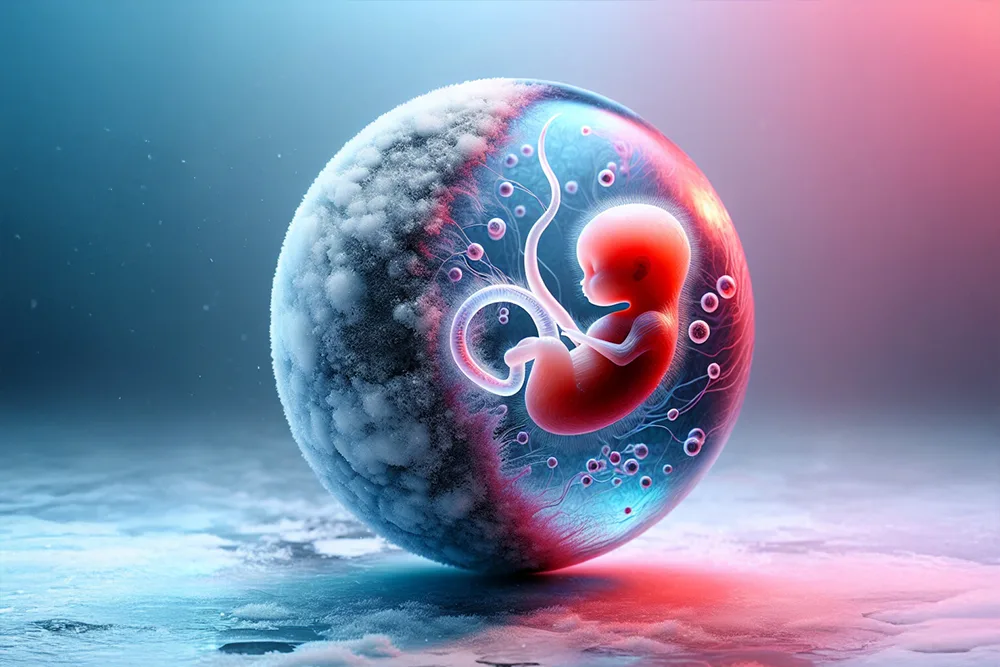
What is Assisted Hatching (Supported Implantation)? In Which Cases is it Performed?
One of the most crucial stages of IVF treatment is the implantation of the embryo into the uterine lining. However, in some cases, the embryo may have difficulty breaking through the protective outer layer that surrounds it.
The Assisted Hatching procedure, is a supportive technique aimed at helping the embryo implant more easily into the uterus.
What is Assisted Hatching?
In the early stages of development, the embryo is surrounded by a protective layer called the ‘zona pellucida.’ Under normal conditions, the embryo needs to thin and break through this layer so it can come out and successfully attach to the uterine lining.
In the assisted hatching procedure, this layer is carefully thinned in the laboratory, or a small opening is created. The aim is to help the embryo emerge more easily and improve its chances of attaching to the uterine lining.
Why Might Assisted Hatching Be Necessary?
Not all embryos go through this process in the same way. In some cases, certain embryos may have difficulty breaking out of their surrounding membrane.
For this reason, assisted hatching may be considered in the following situations:
- Patients of advanced age
- Those who have previously experienced failure in IVF treatment
- Cases where the embryo’s membrane is thick
- Frozen embryo transfers
At this stage, the key factors are the quality of the embryo and how it develops. The techniques used during fertilisation play an important role in determining this quality. In particular, the intracytoplasmic sperm injection (ICSI) method, while allowing for controlled fertilisation, can also directly influence the embryo’s development.
How is Assisted Hatching Performed?
The assisted hatching procedure is performed entirely in the embryology laboratory, with the aim of carefully supporting the process and maintaining optimal conditions for the embryo.
The most commonly used methods are as follows:
- Thinning the zona pellucida using a laser
- Creating a micro-opening using mechanical methods
- Weakening the zona pellucida using chemical methods
Today, the most widely preferred method is laser technology. This allows the procedure to be carried out in a more controlled and precise manner.
The Relationship Between Embryo Quality and Assisted Hatching
The embryo’s ability to implant in the uterus does not depend solely on the thinning of the zona pellucida. The embryo’s genetic and morphological quality also play a significant role in this process.
For this reason, sperm selection may sometimes need to be carried out in greater detail during the fertilisation stage. In particular, advanced sperm selection techniques such as IMSI allow sperm cells to be examined under very high magnification, which may support the development of higher-quality embryos.
Does Assisted Hatching Increase Success Rates?
Assisted hatching is not a standard procedure for every patient. However, when used in appropriate cases, it may help increase the likelihood of the embryo implanting in the uterus.
Key factors influencing success:
- Embryo quality
- Uterine environment
- The patient’s age
- Treatment techniques used
For this reason, the treatment plan must always be tailored to the individual.
Does the Procedure Harm the Embryo?
This is one of the most frequently asked questions. Thanks to modern technologies, the procedure is carried out with great precision.
When performed by experienced embryologists, the risk of harming the embryo is minimal.
Is Assisted Implantation Suitable for Every Patient?
No. This method is only chosen when it is considered likely to benefit specific patient groups.
To avoid unnecessary procedures, the treatment plan must be determined following a specialist assessment.
What Happens After the Procedure?
Following the assisted hatching procedure, embryo transfer is performed and the process continues in the same way as standard IVF treatment.
After this stage, patients can generally return to their daily activities


